


How does wood waste recovery work at Ladó-Rec Kft.?
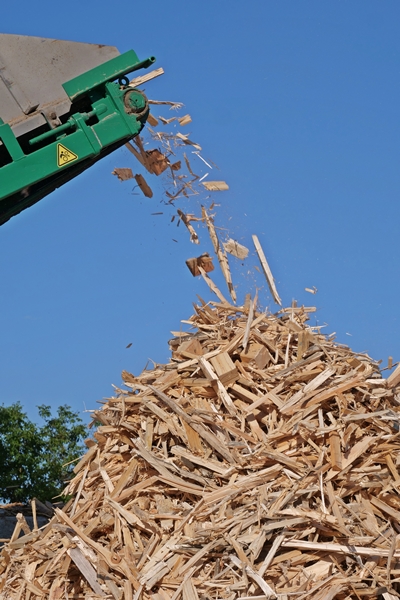 Wood waste utilization means that the resulting wood-based waste is reused or processed for energy production/product production., in accordance with environmental and legal requirements.
This is especially important for our partners who regularly deliver larger quantities, as it avoids waste accumulation or process disruptions. Transparent and scheduled acceptance ensures that wood waste management does not disrupt daily operations, while providing a safe, regular and efficient solution.
What does this process look like exactly – or step by step?
- Reception – wood waste can be collected at our site or at a previously agreed location.
- Sorting – we sort the wood by condition and type, preparing it for further processing.
- Renovation – repairable pallets and packaging are handed over for reuse.
- Preparation for shredding – we process the non-repairable elements and make them into shreds.
- Recycling – the finished chips are returned to the cycle as a manufacturing raw material, giving the wood a new life and actively contributes to sustainable management.
This approach ensures that wood waste management continuous, transparent and value-creating process be, which does not interrupt, but continues the tree's "life journey" in a new role.
Chip production – the key to wood waste utilization
Chip production is a fundamental technological step in the utilization of wood waste. With the help of our industrial chippers, the wood material is brought to a homogeneous, suitable grain size, free from contamination, meeting the requirements of further industrial use.
During the process, we pay special attention to the fixed particle size, as this is the only way to ensure that the chips are suitable for the manufacturer's specifications. The main goal is to guarantee consistently high quality, which results in a reliable supply of raw materials for our partners in the long term.
Wood waste: repairable packaging
The primary goal of wood waste recycling is to preserve value: reusing usable elements – such as pallets – prevents recycling into other materials such as shredding. During sorting, damaged but repairable pallets and packaging are treated separately, and then we forward them for renovation, recycling or do it ourselves.
This process extends the life cycle of the wood, reduces the amount of chips and reduces the need to harvest new wood. This level of wood waste utilization is highly efficient from both an economic and environmental perspective, as it simultaneously supports sustainability and maximizes the use of valuable material.
Chip market – where does wood waste go after processing?
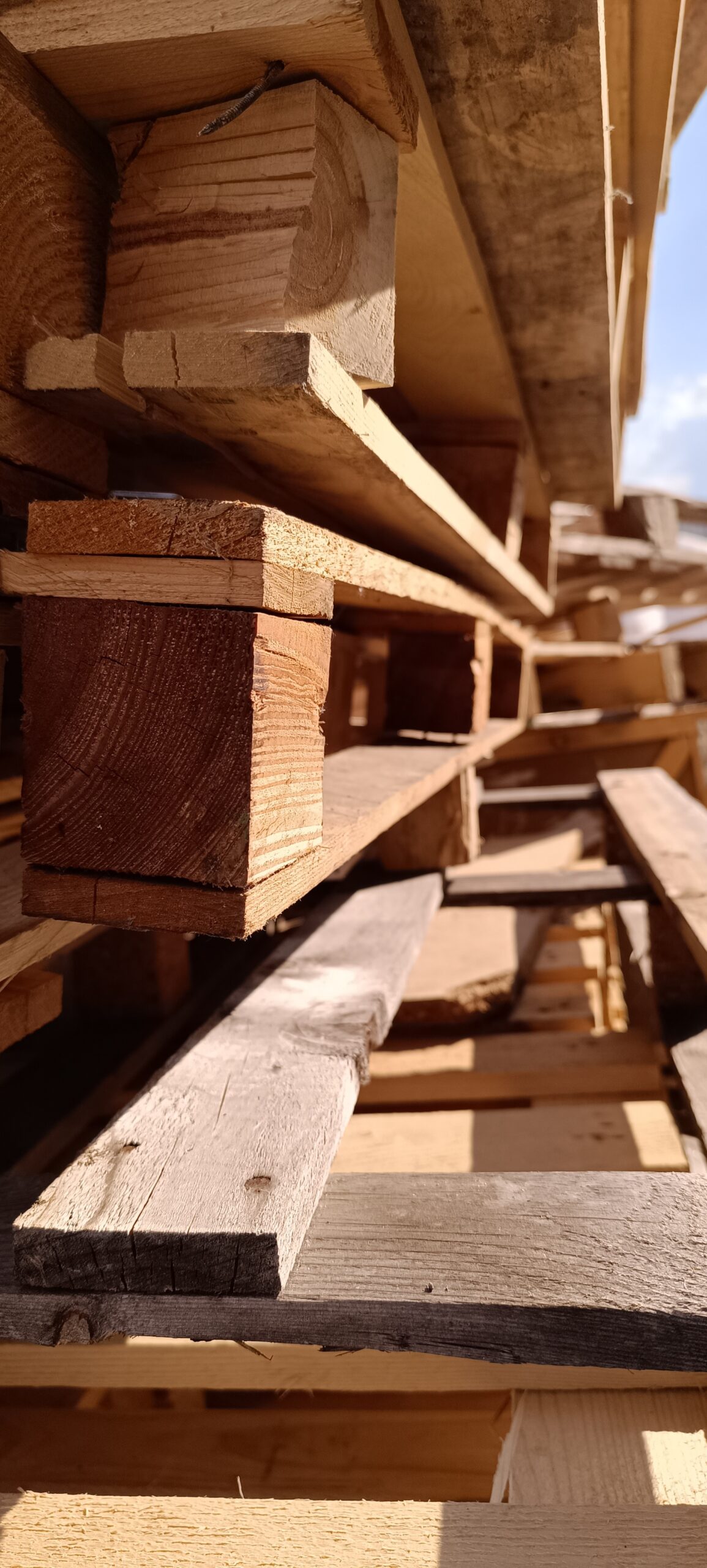 The chips generated during processing are sent to industrial players who use them as raw materials for production.t used, mainly in the production of furniture and construction panels. This connection makes the principle of the circular economy tangible: The processed material is not lost, but lives on in new products that become part of everyday life.
Primarily furniture panel and sheet manufacturers, Plants process the chips into new products. This is a practical example of the circular economy: waste is turned into valuable raw materials, and the finished product is put back on the market.
The marketability of the raw material processed during wood waste utilization is crucial, as it makes the system economically sustainable. When the recovered wood meets real demand, the entire chain remains stable, and processing is not a one-off, but a long-term, predictable solution for, among others, both waste producers and users.
Environmental benefits of wood waste utilization
For many businesses, the biggest question is not whether wood waste processing is necessary, but how well it can be integrated into everyday operations.
In the Ladó-Rec Kft. system, the process adapts to the partner, not the other way around, so sustainability does not appear as an additional burden, but as a real operational advantage.
One of the most important effects of wood waste utilization is the reduction of environmental burdens:
- less waste goes to landfills
- CO₂ emissions are reduced,
- the demand for new wood is decreasing.
Regular processing supports responsible forest management, as recycled wood partially replaces new logging. This protects forests in the long term and reduces raw material consumption, while ensuring a sustainable, predictable supply of materials for partners.
Legal background – concession and registration
The utilization of wood waste can be carried out within a strict legal framework, and only an official, licensed partner is entitled to receive and process it. The concession system also ensures that all processes are completely regular and controllable.
Processing also includes accurate record keeping: receipt documents, utilization certificates, processing protocols, and official reports are prepared.
Regulated operation is not only legal compliance, but also security for partners, as every step can be traced and verified, guaranteeing the transparency and reliability of the process.
Partners in the wood waste utilization system
Wood waste recycling operates as a well-thought-out chain that connects multiple actors and ensures the full value creation of the material. The process starts with waste producers, who regularly deliver the resulting wood waste, and then the material is sent to a licensed processor, where sorting, renovation and shredding take place.
The processed wood waste is then sent to manufacturers, where it is repurposed as a raw material for new products such as furniture boards, particle boards or other wood products. This chain not only reduces waste, but also ensures that the wood is used as a valuable resource in the long term, a practical example of the circular economy.
Every player in the chain is key, as a transparent and well-organized process from waste producer to user ensures that wood waste remains in the economy as a recyclable resource, not as a loss.
Contact

If you have any questions regarding the handover of waste, please mail us at info@ladorec.hu or call +36 30 943 67 94.
